

Online marketplaces have made it easier than ever for businesses to start selling online. However, as your business grows, having your own e-commerce website becomes essential for building a stronger brand, improving customer trust, and creating a seamless shopping experience.
Exploring different online store website examples can help you understand what makes an effective e-commerce website. Beyond attractive design, a successful online store should offer intuitive navigation, fast loading speeds, secure payment options, and search engine optimization (SEO) to attract more potential customers.
In this article, you’ll discover inspiring online store website examples, learn how to create an online store website, explore the different types of e-commerce websites, and understand the key benefits of having an e-commerce website.
Why Does Your Business Need an Online Store Website?
An e-commerce website is more than just a platform to display products. It serves as your business’s digital headquarters, where you have complete control over branding, customer experience, marketing campaigns, and business operations.
Unlike third-party marketplaces, your website allows you to customize every aspect of the shopping journey while building long-term relationships with customers.
Additionally, an SEO-optimized website can generate consistent organic traffic from Google, helping reduce dependence on paid advertising and marketplace algorithms.
10 Online Store Website Examples for Inspiration
Every business has unique requirements when developing an e-commerce website. The following examples showcase common website types across various industries.
1. Fashion E-Commerce Website
Fashion websites typically feature visually appealing layouts with high-quality product photography, product filters, size guides, color options, and wishlist functionality to enhance the shopping experience.
2. Electronics Online Store
Electronics websites focus on providing detailed product specifications, comparison tools, customer reviews, warranty information, and personalized product recommendations to support purchasing decisions.
3. Food and Beverage Website
Food and beverage websites emphasize attractive product imagery, digital menus, online ordering systems, and integration with delivery services to simplify the ordering process.
4. Beauty and Skincare Website
Beauty websites often include ingredient information, product benefits, usage instructions, customer testimonials, and personalized skincare recommendations to build customer confidence.
5. Furniture and Home Decor Website
Furniture websites usually feature large product images, room visualization tools, detailed dimensions, material information, and design inspiration to help customers choose the right products.
6. Digital Product Website
These websites sell downloadable products such as software, e-books, templates, online courses, subscriptions, and other digital services with automated delivery after purchase.
7. B2B E-Commerce Website
Business-to-business websites typically include product catalogs, quotation request forms, technical specifications, bulk purchasing options, and consultation features for corporate buyers.
8. Small Business Online Store
Small business websites often prioritize simplicity while maintaining a professional appearance. They focus on showcasing products, telling the brand story, and making online purchasing straightforward.
9. Multi-Brand Online Store
Multi-brand websites offer products from multiple manufacturers within a single platform. These websites usually provide advanced search filters, product categorization, and personalized recommendations.
10. Custom E-Commerce Website
Custom-built e-commerce websites are designed specifically around a company’s operational needs. They often include custom features, ERP or CRM integration, membership systems, advanced inventory management, and tailored customer experiences.
How to Create an Online Store Website
After exploring various website examples, the next step is understanding how to create an online store website that supports your business goals.
Start by identifying your business objectives and target audience. Then register a memorable domain name, choose reliable web hosting, and select an e-commerce platform that fits your requirements.
Next, create a responsive website design, upload high-quality product listings, integrate secure payment gateways and shipping solutions, and optimize every page for search engines.
Finally, monitor website performance regularly using analytics tools and continuously improve the user experience based on customer behavior.
Types of E-Commerce Websites
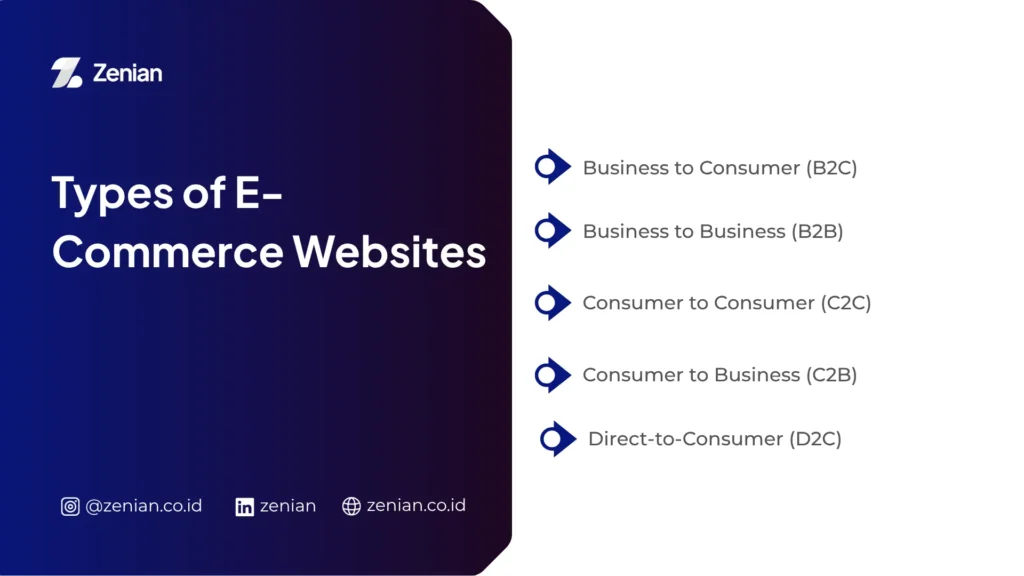
Different businesses require different e-commerce models. Understanding the various types of e-commerce websites helps you choose the right solution.
1. Business-to-Consumer (B2C)
B2C websites sell products or services directly from businesses to individual consumers. This is the most common e-commerce model.
2. Business-to-Business (B2B)
B2B websites facilitate transactions between companies. They often include wholesale pricing, quotation requests, bulk ordering, and account-based purchasing systems.
3. Consumer-to-Consumer (C2C)
C2C platforms connect individual buyers and sellers, allowing users to trade products directly through an online marketplace.
4. Consumer-to-Business (C2B)
In this model, individuals offer products or services to businesses. Freelancers, influencers, consultants, and content creators commonly operate within this framework.
5. Direct-to-Consumer (D2C)
D2C websites allow manufacturers or brands to sell directly to customers without involving distributors or third-party retailers, giving businesses greater control over customer relationships.
Benefits of Having an E-Commerce Website
There are numerous benefits of having an e-commerce website beyond simply selling products online.
First, your website gives you complete ownership of your brand identity, website design, pricing strategy, and customer experience.
Second, an e-commerce website strengthens your credibility and helps establish long-term customer trust.
Third, your website allows you to collect first-party customer data, implement SEO strategies, launch personalized marketing campaigns, and reduce dependence on changing marketplace algorithms.
As your business grows, your website becomes a valuable digital asset that continuously supports brand awareness, customer acquisition, and revenue generation.
Reviewing different online store website examples provides valuable insights into building a successful e-commerce platform. By understanding how to create an online store website, selecting the appropriate types of e-commerce websites, and recognizing the benefits of having an e-commerce website, you can build a digital storefront that supports sustainable business growth.
Build Your Professional E-Commerce Website with PT Zenian Digital Labs
Creating a successful online store requires more than attractive visuals. Your website should deliver fast performance, responsive design, robust security, SEO optimization, and an outstanding shopping experience that converts visitors into loyal customers.
PT Zenian Digital Labs provides professional E-Commerce Website Development Services tailored to businesses of all sizes. Our experienced team supports every stage of development, including business consultation, UI/UX design, custom development, payment gateway integration, SEO implementation, performance optimization, and ongoing website maintenance.
Whether you’re launching your first online store or upgrading an existing e-commerce platform, PT Zenian Digital Labs can help you build a scalable website that drives traffic, increases conversions, and supports long-term business growth.
Contact PT Zenian Digital Labs today to learn more about our E-Commerce Website Development Services and start building an online store designed for success.
Also Read: 10 Ways to Build Your Own E-Commerce Website: A Complete Guide!