


In an increasingly competitive digital era, writing is no longer just a supporting element of a marketing strategy. Content has now become one of the key factors that determine whether a brand is trusted, clicked, or simply ignored. This is where the roles of content writing and copywriting often appear—and are often confused.
Many businesses assume the two are the same because both involve “writing for marketing.” In reality, the differences between content writing and copywriting are quite fundamental, ranging from objectives and writing style to their impact on the marketing funnel. Misplacing these roles can lead to an ineffective content strategy.
This article will explore the differences between content writing and copywriting in depth, complete with examples, KPIs, and career prospects in 2026. It’s ideal for those building a digital team, defining a content strategy, or even choosing a career path.
What Is Content Writing?
Content writing is the process of creating content aimed at providing information, education, or insights to an audience. Its main focus is not direct selling, but building awareness, trust, and long-term brand authority.
The content produced typically includes blog articles, educational landing pages, whitepapers, e-books, or SEO-focused content. In practice, content writing is closely tied to keyword research, content structure, and user search intent.
For businesses, content writing serves as a digital foundation. Consistent, high-quality content helps brands get discovered in search engines while also building credibility in the eyes of potential customers.
What Is Copywriting?
Copywriting is a writing technique focused on encouraging audiences to take a specific action. This action could be clicking, signing up, purchasing, or contacting a business.
Copywriting is commonly used in digital ads, landing page headlines, email marketing, banners, and promotional captions. Every word is strategically chosen to influence emotions and decision-making.
If content writing builds long-term relationships, copywriting is the primary weapon at the conversion stage. Both complement each other, but they serve very different purposes.
Differences Between Content Writing and Copywriting
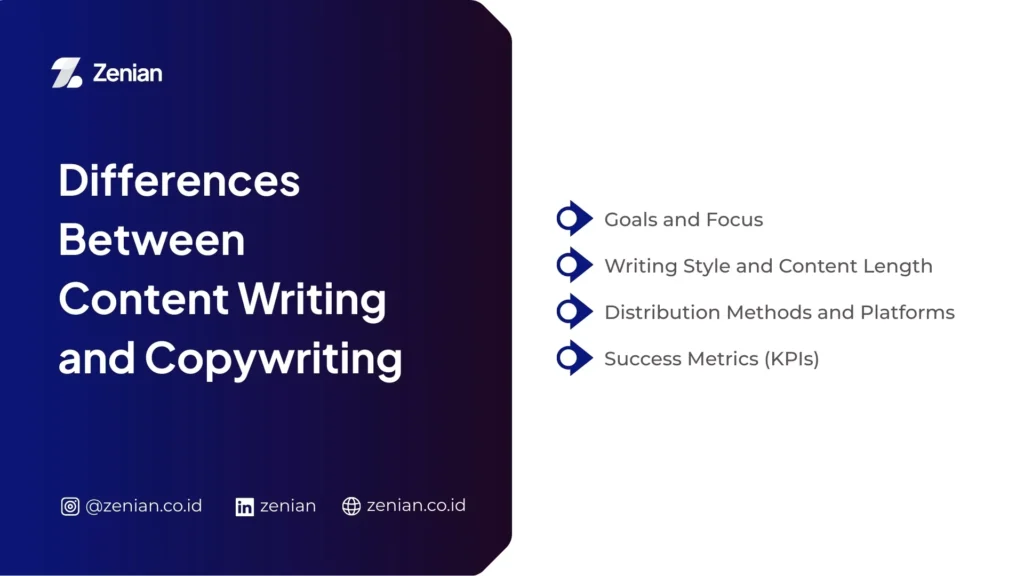
Content writing and copywriting both play important roles in digital strategies, but they have different functions and approaches. Understanding these differences helps businesses place the right type of content at each stage of the customer journey.
1. Goals and Focus
Content writing focuses on delivering value through relevant and in-depth information. The goal is to help audiences understand, trust, and return to the brand.
Copywriting focuses on immediate results. Its primary goal is conversion, in whatever form the business requires.
In short, content writing answers “why” and “how,” while copywriting pushes “take action now.”
2. Writing Style and Content Length
Content writing tends to use an informative, structured, and relatively long-form style. Articles can range from hundreds to thousands of words, supported by logical flow and data.
Copywriting, on the other hand, is concise, punchy, and persuasive. Even a single sentence or headline can have a major impact if written effectively.
These differences mean the skills required are also different, even though both are rooted in writing.
3. Distribution Methods and Platforms
Content writing is usually published on blog websites, online media, or educational platforms. Its distribution relies heavily on SEO and organic traffic.
Copywriting appears more often in paid channels or high-conversion channels such as Google Ads, social ads, landing pages, and email marketing.
From a strategic standpoint, content writing works over the long term, while copywriting is often used for faster, more measurable campaigns.
4. Success Metrics (KPIs)
The success of content writing is measured through metrics such as organic traffic, time on page, bounce rate, and keyword rankings.
Copywriting success is measured through conversion rate, click-through rate (CTR), cost per conversion, or generated revenue.
These KPI differences reinforce that each plays a distinct role in the digital marketing funnel.
Examples of Content Writing and Copywriting
To better understand the differences beyond theory, real-world examples are far more helpful. From content types to delivery style, the examples below show how each works in different business contexts.
1. Content Writing Examples
Blog articles such as “Benefits of SEO for Business,” product usage guides, or customer case studies are examples of content writing. This type of content aims to help audiences understand a topic in depth.
Such content is usually optimized for search engines and becomes a long-term asset for a business website.
2. Copywriting Examples
Ad headlines like “Increase Sales by Up to 2x in 30 Days” or CTAs such as “Sign Up Now” are examples of copywriting.
Although short, copywriting is designed to trigger immediate responses and drive decisions.
Career Prospects: Content Writing vs Copywriting
In 2026, both career paths offer strong prospects. Content writing is increasingly in demand as businesses focus more on SEO, market education, and brand authority.
Copywriting remains critical because businesses will always need conversions. In fact, copywriters who understand data and marketing funnels are becoming even more valuable.
The best career choice depends on personal interest: whether you prefer building long-term narratives or working on persuasion and conversion.
Have You Decided Between Content Writing or Copywriting?
Understanding the differences between content writing and copywriting is the first step in choosing a content strategy or career path. Most importantly, the two are not meant to compete, but to be combined strategically.
For businesses, the right integration of content writing and copywriting can strengthen branding while also driving sales. That’s why focused execution is essential.
If you want to develop a comprehensive content strategy, copywriting, and digital marketing approach, PT Zenian Digital Lab is ready to be your digital partner—from planning and content production to measurable conversion-focused strategies.