
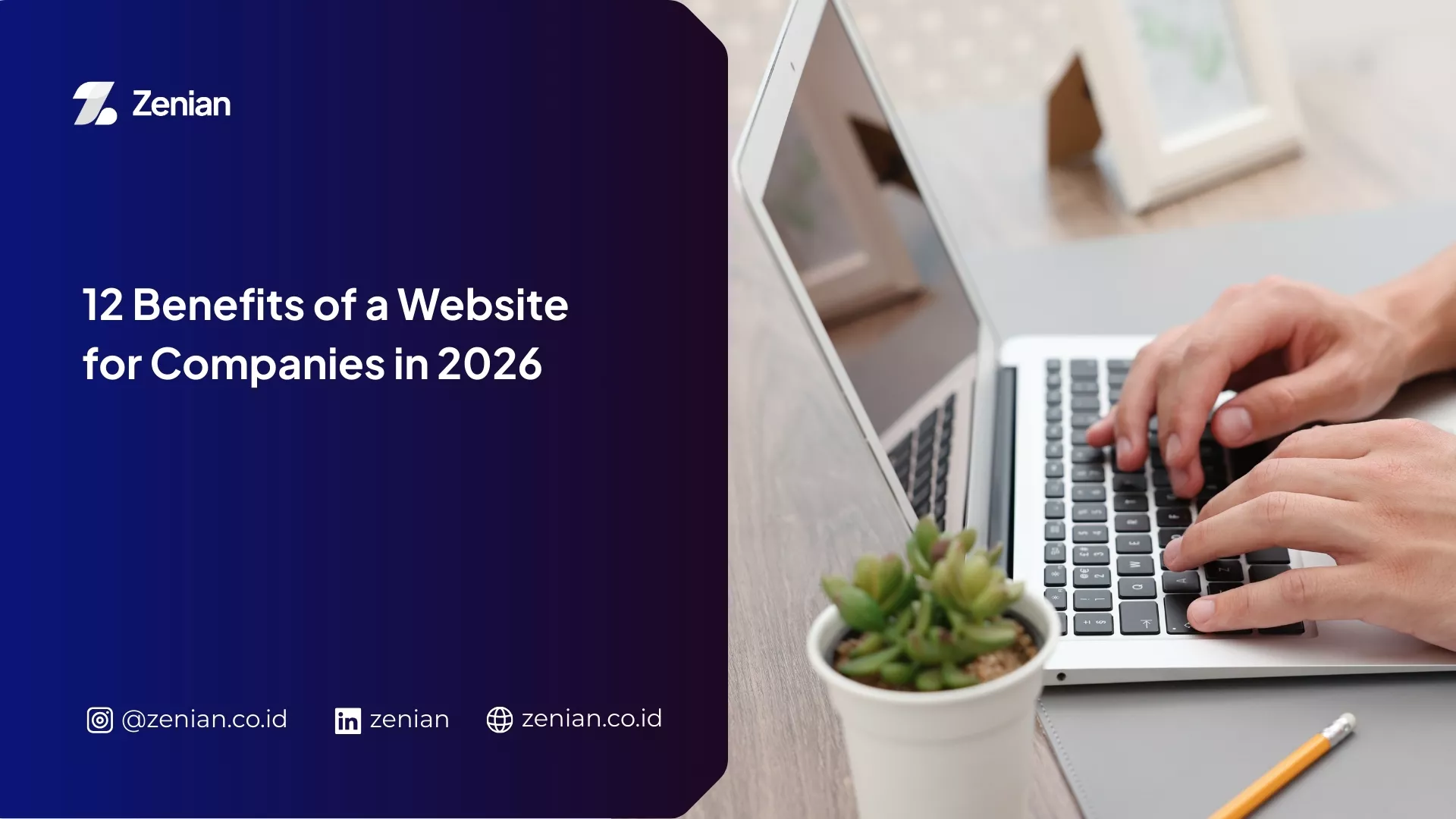
In 2026, having a website is no longer just a business formality. A website has transformed into an information hub, a marketing tool, and a professional representation of a company in the public eye. For many potential customers, a website is the very first point of reference when assessing a brand’s credibility.
Companies that do not yet have a website, or have one that is poorly managed, risk losing market trust. In today’s fully digital consumer behavior, business decisions are often made before any direct contact takes place—and websites play a major role in that process.
This article will discuss the benefits of a website for companies comprehensively, not only in terms of presence, but also its impact on marketing, operations, and long-term business growth.
Benefits of a Website for Companies
A website is no longer just a digital identity, but a strategic asset that directly supports company growth. Through a website, companies can build credibility, reach broader markets, and continuously optimize business processes.
1. Increasing Company Visibility and Credibility
For business owners, visibility is the gateway to every business opportunity. A website allows a company to exist in the digital space that has become the primary reference point for potential customers, partners, and investors. When someone searches for a company name or specific services on Google, the website acts as an “official storefront” that shows the business is real and active.
From a credibility standpoint, a website provides a professional impression that cannot be replaced by social media alone. Information such as company profiles, legal status, portfolios, and past clients helps build trust even before any direct communication takes place. Many business decisions today are made based on first impressions formed through a website.
Without a website, companies are often perceived as less serious or digitally behind. This is why a website is not just a marketing tool, but a representation of corporate reputation in the public eye.
2. A Source of Information for Customers and Prospective Clients
A website functions as an information center that can be accessed anytime, without limitations of time or location. Customers no longer need to contact the company just to ask basic questions such as services, pricing, or processes.
For business owners, this means operational efficiency. Teams do not need to repeatedly answer the same questions, as the website already provides structured and clear explanations. Well-presented information also helps filter prospects who are genuinely relevant.
In addition, a website allows companies to control their narrative and business messaging. All information is delivered consistently, accurately, and aligned with the brand positioning they want to build.
3. Making Product or Service Promotion Easier
A website is a promotional channel fully owned by the company. Unlike third-party platforms whose algorithms can change at any time, a website gives full control over content and marketing messages.
Business owners can showcase products or services in detail, complete with value propositions, case studies, and testimonials. This helps potential customers understand the value offered without requiring one-by-one explanations.
A website also serves as the foundation for various digital marketing activities such as SEO, paid advertising, and email marketing. Without a solid website, promotional efforts often fail to reach their full potential.
4. Improving the Quality of Customer Service
A website enables companies to provide faster and more structured services. Features such as contact forms, live chat, FAQs, or knowledge bases help customers find solutions without waiting for manual responses.
From a business owner’s perspective, this improves service quality without requiring significant additional human resources. Customers feel supported, while operations remain efficient.
A positive customer experience directly impacts loyalty and company image. Websites play a crucial role in shaping that experience.
5. Increasing the Number of Transactions
A website does not only function as an information channel, but also as a sales tool. For both B2C and B2B businesses, websites often serve as the starting point before a transaction occurs.
With the right structure, a website can guide visitors toward specific actions such as contacting sales teams, filling out inquiry forms, or making direct purchases. This positions the website as an integral part of the sales funnel.
For business owners, websites help accelerate conversion processes and increase closing opportunities without relying entirely on manual sales efforts.
6. Expanding Market Reach
A website allows companies to reach far wider markets compared to offline methods. Local businesses can gain national or even international exposure without opening physical branches.
With the right SEO and digital marketing strategies, websites become highly efficient tools for market expansion. This opens growth opportunities without requiring large upfront investments.
For business owners, a website serves as a gateway to new markets with relatively lower risk.
7. Making Information Updates Easier
The business world moves fast, and information must always stay relevant. Websites allow companies to update information instantly—from promotions and new services to important announcements.
Business owners do not need to rely on print media or third parties to deliver messages. Everything can be managed directly through the website.
This flexibility helps companies remain adaptive to market changes and customer needs.
8. Serving as an Educational Platform
Websites can be used to educate the market through articles, blogs, or case studies. This education helps potential customers better understand their problems and see the company as the right solution.
For business owners, market education reduces resistance during the sales process. Customers who are already informed tend to be more ready to make decisions.
Educational content also strengthens a company’s positioning as an expert in its field.
9. Improving Company Performance
Websites provide valuable data such as visitor behavior, most-viewed pages, and most-demanded services. This data helps business owners make fact-based decisions.
By analyzing website data, business strategies can be optimized more accurately—whether in marketing, product development, or customer service.
A website becomes a continuous evaluation and improvement tool for the company.
10. Generating Organic Traffic
Websites optimized with SEO can attract organic visitors from search engines. This is a long-term asset that continues to deliver results without pay-per-click advertising costs.
Organic traffic usually comes from users with specific needs, making it higher in quality and more likely to convert.
For business owners, this means sustainable marketing with more cost-efficient spending.
11. Reducing Service Costs
Websites help reduce operational costs by automating many processes, such as information delivery and basic customer services.
Companies no longer need to rely entirely on manual communication for every interaction. This saves time, energy, and expenses.
In the long run, websites contribute significantly to overall business efficiency.
12. Buyer Persona Research
Through website data, companies can understand who their potential customers are, what they are searching for, and how they behave.
This information is crucial for business owners in developing more targeted marketing strategies. Decisions are no longer based on assumptions, but on real data.
Websites become research tools that help businesses grow in a more focused direction.
This Is Why Companies Need a Website
A website is no longer an optional asset, but a core foundation of modern business strategy. From building credibility to driving growth, the benefits of a website for companies are broad and impactful in the long term.
However, a website will only be effective if it is designed and managed with the right strategy from design and content to performance optimization. If your company wants to build or optimize a website as a business growth tool, partnering with experienced professionals is a strategic move.
PT Zenian Digital Lab is ready to support companies in website development, SEO optimization, and measurable digital strategies—so your website doesn’t just exist online, but truly works for your business.