

In today’s digital era, having an online store website is one of the most effective ways to grow a business. With your own website, you can reach more customers, build brand credibility, and increase sales without relying entirely on online marketplaces.
If you are looking for information on how to create a website for selling, this guide will walk you through the entire process, from preparation and setup to optimization strategies that can help attract more customers and increase conversions.
Why Is an Online Store Website Important for Business?
A website is more than just a product catalog. It serves as the central hub for your digital marketing activities and gives you complete control over your brand, customer experience, and sales process.
Some key benefits of having an online store website include:
- Building trust and credibility with potential customers.
- Reaching a broader audience.
- Simplifying online transactions.
- Supporting SEO and digital marketing efforts.
- Creating a long-term business asset.
A professional website allows customers to browse and purchase products anytime without being limited by business hours.
Preparation Before Creating a Website for Selling
Before building your website, there are several important steps to take to ensure a smooth and effective development process.
1. Determining the Products You Want to Sell
The first step is deciding which products or services you plan to offer. Make sure your products have a clear target audience and provide unique value compared to competitors.
You should also prepare complete product information, including:
- Product specifications.
- Pricing details.
- Benefits and features.
- Competitive advantages.
Having well-organized product information will make it easier to build your website and market your products effectively.
2. Identifying Your Target Market
Understanding your target audience is essential for creating a successful online store.
Consider the following factors:
- Age group.
- Geographic location.
- Interests and preferences.
- Online shopping behavior.
Knowing your audience will help you design the website, create effective marketing messages, and develop strategies that resonate with potential customers.
3. Choosing the Right Domain Name
A domain name is the web address customers use to access your website.
Tips for choosing a domain name:
- Keep it easy to remember.
- Make it easy to type.
- Ensure it reflects your brand.
- Avoid excessively long names.
- Use trusted extensions such as .com or .co.id.
A strong domain name helps establish professionalism and makes it easier for customers to find your business online.
4. Preparing Content and Product Photos
High-quality content plays a significant role in the success of an online store website.
Prepare the following:
- High-resolution product images.
- Detailed product descriptions.
- Pricing information.
- Customer testimonials.
- Supporting content such as blog articles.
Compelling visuals and informative descriptions can increase customer trust and encourage purchases.
How to Create a Website for Selling
Once the preparation stage is complete, you can begin building your online store website.
1. Choosing the Right Website Platform
There are several platforms available for creating an online store, including:
- WordPress with WooCommerce
- Shopify
- Wix
- Squarespace
- Magento
For beginners, WordPress is often the preferred choice because it is flexible, user-friendly, and offers a wide range of plugins and customization options.
2. Purchasing a Domain and Hosting
After selecting a platform, the next step is purchasing a domain name and web hosting.
Hosting serves as the storage location for your website files, while the domain acts as the website’s address.
When choosing a hosting provider, consider:
- Fast loading speeds.
- Reliable uptime.
- Strong security features.
- Responsive customer support.
Quality hosting has a direct impact on website performance and user experience.
3. Creating Product Pages
Product pages should be informative, visually appealing, and designed to convert visitors into customers.
Important elements include:
- Product images.
- Product name.
- Price.
- Detailed descriptions.
- Buy-now buttons.
- Customer reviews.
The more comprehensive the information, the greater the likelihood of generating sales.
4. Adding Payment Methods
Your website should offer multiple payment options to provide convenience for customers.
Common payment methods include:
- Bank transfers.
- Virtual accounts.
- Digital wallets.
- QR code payments.
- Credit cards.
Offering various payment options can improve customer satisfaction and reduce abandoned purchases.
5. Setting Up a Shipping System
Integrating shipping services into your website allows customers to choose delivery options that suit their needs.
Useful shipping features include:
- Automatic shipping cost calculations.
- Shipment tracking.
- Multiple courier options.
- Delivery time estimates.
An efficient shipping system enhances the overall customer experience after a purchase is made.
How to Create a Free Website for Online Selling
For entrepreneurs with limited budgets, there are several ways to create a free website for online selling.
1. Creating an Online Store with WordPress.com
WordPress.com offers a free plan that allows users to build a basic website.
Advantages include:
- Easy setup.
- No separate hosting required.
- Access to various themes.
However, the free version has limitations in terms of customization and advanced features.
2. Using Google Sites for Online Selling
Google Sites allows users to create simple websites at no cost.
It is suitable for:
- Basic product catalogs.
- Business landing pages.
- Company information websites.
Although free, Google Sites offers limited e-commerce functionality compared to dedicated online store platforms.
3. Building a Free Website with Website Builders
Several website builders offer free plans, including:
- Wix
- Weebly
- SITE123
These platforms provide ready-made templates, making website creation quick and straightforward.
4. Advantages and Disadvantages of Free Websites for Business
Advantages:
- No initial investment required.
- Easy to use.
- Ideal for beginners.
Disadvantages:
- Limited features.
- Restricted customization.
- Platform branding may remain visible.
- Less suitable for long-term business growth.
For businesses that aim to scale, investing in a professional website is generally the better option.
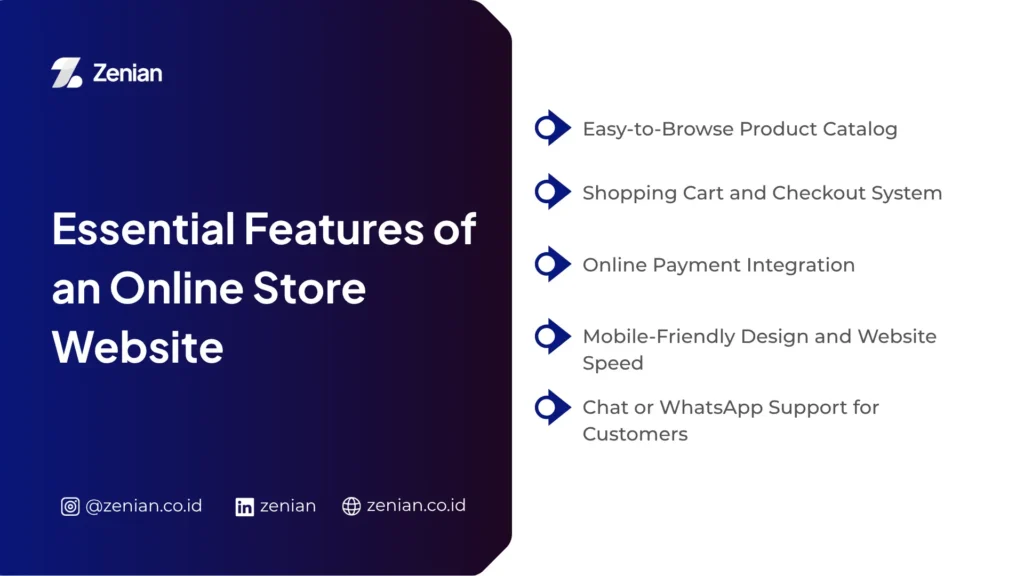
Essential Features of an Online Store Website
To maximize sales potential, your online store should include several important features.
1. Easy-to-Browse Product Catalog
Products should be organized into clear categories and easily accessible through navigation menus and search functions.
A well-structured catalog improves the shopping experience and helps customers find products quickly.
2. Shopping Cart and Checkout System
The shopping cart allows customers to save multiple items before making a purchase.
The checkout process should be simple and streamlined to minimize cart abandonment.
3. Online Payment Integration
Payment gateway integration enables secure and automated payment processing.
This feature can accelerate payment verification and improve transaction efficiency.
4. Mobile-Friendly Design and Website Speed
Most online shoppers browse websites using mobile devices.
Therefore, your website should:
- Be responsive across all screen sizes.
- Load quickly.
- Provide a seamless mobile experience.
A slow website can increase bounce rates and negatively affect conversions.
5. Chat or WhatsApp Support for Customers
Fast communication often leads to higher conversion rates.
Integrating WhatsApp or live chat allows customers to ask questions and receive assistance before making a purchase decision.
How to Optimize an Online Store Website
After launching your website, optimization is essential to improve visibility and drive traffic.
1. SEO Optimization for an Online Store Website
Search Engine Optimization (SEO) helps your website rank higher in search engine results.
Effective SEO practices include:
- Using relevant keywords.
- Organizing content with proper heading structures.
- Optimizing meta titles and meta descriptions.
- Building internal links.
- Improving website speed.
Consistent SEO efforts can generate sustainable organic traffic over time.
2. Writing Compelling Product Descriptions
Product descriptions should highlight not only features but also the benefits customers will receive.
Use persuasive yet informative language to encourage purchasing decisions.
3. Using High-Quality Product Images
Product images significantly influence buying decisions.
Ensure your images are:
- Clear and professional.
- Captured from multiple angles.
- Well-lit.
- Accurate representations of the actual product.
High-quality visuals help build trust and increase conversion rates.
4. Leveraging Content Marketing and Blogging
Adding a blog to your website can help attract organic traffic through search engines.
Examples of useful content include:
- Educational guides.
- Product usage tips.
- Industry insights.
- Case studies.
Content marketing also helps establish your business as an authority within your niche.
5. Connecting Your Website with Social Media
Integrating your website with social media platforms can expand your marketing reach.
Useful integrations include:
- Social sharing buttons.
- Social media profile links.
- Instagram feeds.
- Advertising campaigns that direct users to your website.
This strategy can increase website traffic while strengthening brand awareness.
Build a Professional Online Store Website with Zenian
Learning how to create a website for selling is the first step toward building a successful online business. However, creating a professional, secure, fast, and SEO-friendly website requires expertise and strategic planning.
PT Zenian Digital Lab is ready to help you build an online store website that not only looks professional but is also designed to increase conversions and support long-term business growth. From website design and development to SEO optimization and e-commerce integration, our solutions are tailored to meet your unique business needs.
Contact Zenian today and start building a professional online store website that is ready to compete in the digital marketplace.
Read Too: The Benefits and Functions of a Blog for Business and Personal Branding