


You may have heard that a content pillar is an important strategy in modern SEO, but you may not fully understand how it works. This article will explain the concept of building structured and sustainable content.
With the right approach, you can increase your website’s visibility while attracting a more relevant audience. Not only that, but you will also learn how this strategy helps strengthen topical authority in search engines.
What Is a Content Pillar? (Complete Definition)
A content pillar is a main theme or broad topic that serves as the foundation of a brand or business content strategy. This concept is like a pillar in a building that supports the entire structure, keeping it strong, focused, and stable even as trends continue to change.
In practice, brands usually define around 3 to 5 main topics that are most relevant to their audience’s needs while reflecting the values they want to communicate.
The difference between a content pillar and a regular article can be seen in its function, structure, and depth within a content strategy. Implementing content pillars also has a significant impact on the success of digital marketing strategies.
Functions of Content Pillar in Digital Marketing Strategy
Implementing content pillars is a core strategy for building a strong and structured digital presence. Here are the main functions:
Content Pillar for Website Structure
In a website structure, content pillars act as the main foundation that keeps the overall content strategy organized and consistent.
This concept is known as the hub-and-spoke model, where the pillar page acts as the central hub connecting various subtopics or cluster content as spokes.
With this approach, you can create a clear flow of information while delivering your brand message more effectively.
Improving Internal Linking
Content pillars help you build strong and structured internal linking. Each supporting content piece within a topic is interconnected and points back to the main pillar page.
This pattern creates an integrated content ecosystem, making it easier for users to find related information. It also helps search engines understand the relationship and hierarchy between pages.
Strengthening Main Topics (Topical Authority)
By covering a topic in depth, content pillars help you build topical authority and demonstrate expertise in a specific field.
This strategy supports content quality in line with Google’s E-E-A-T principles (Experience, Expertise, Authoritativeness, and Trustworthiness).
As a result, your brand becomes more credible, competitive, and trustworthy over time.
Supporting Long-Term SEO Strategy
Content pillars play an important role in long-term SEO performance through several benefits:
- Increasing rankings and organic traffic: Structured content helps pages appear in top search results consistently
- Maintaining long-term relevance: Content remains strong despite changing trends
- Attracting quality backlinks: Comprehensive content is more likely to be referenced by other websites
- Simplifying algorithm optimization: Platforms like Google, TikTok, and Instagram can better understand your main topics and keywords
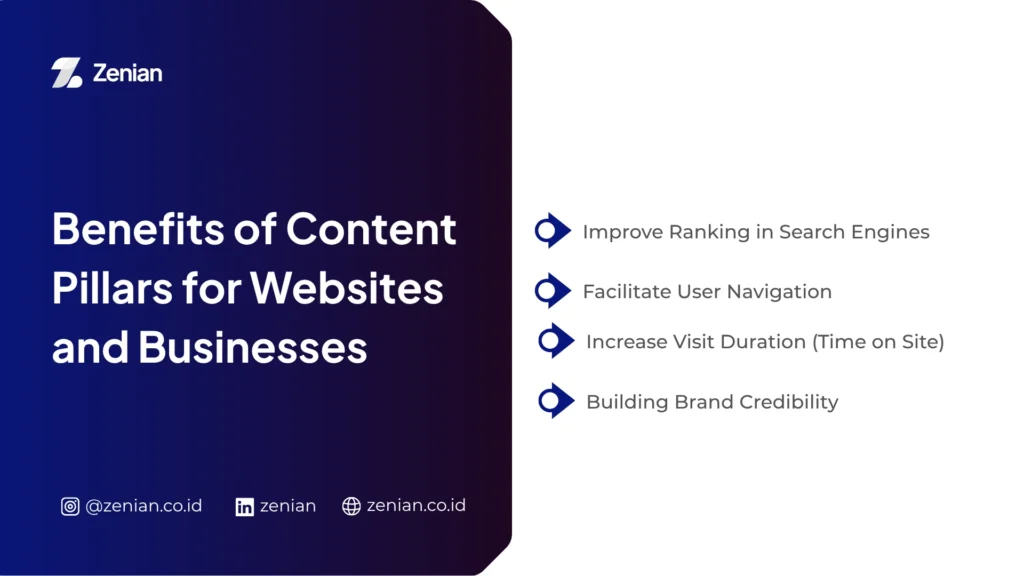
Benefits of Content Pillar for Websites and Businesses
Content pillars build a strong foundation in digital marketing because each piece of content has a clear direction and provides value to both users and search engines.
1. Improving Search Engine Rankings
Content pillars optimize SEO by focusing on relevant topics.
This makes it easier for search engines to understand the structure and context of your content, increasing the chances of ranking on the first page.
In-depth content also attracts high-quality backlinks, which boost website authority.
2. Enhancing User Navigation
The hub-and-spoke structure creates an organized content ecosystem.
The main page acts as the information center, while subtopics are connected through internal links.
This makes it easier for users to explore content without confusion.
3. Increasing Time on Site
Well-structured and in-depth content keeps users engaged.
The presence of multiple subtopics encourages users to explore more pages, increasing session duration.
4. Building Brand Credibility
Content pillars help businesses demonstrate expertise and authority.
Impacts include:
- Building trust through valuable educational content
- Strengthening brand identity
- Improving reputation and authority
- Maintaining consistent messaging
Read Too: How to Write a Good article and Proper for Beginners
Types of Content Pillars
1. Guide Content (Complete Guide)
Guide content serves as the main pillar page or “hub” that covers a broad topic comprehensively.
It demonstrates expertise and builds trust.
Usually presented as long-form content (Ultimate Guide), it is connected to supporting articles covering specific subtopics.
2. Listicle Pillar (Topic Lists)
This type organizes information into structured lists.
Brands typically define 3–5 main pillars and expand them into subtopics such as:
- Data security tips
- Product selection guides
- Performance strategies
This format improves readability and engagement.
3. Resource Pillar (Reference Hub)
Resource pillars act as a “content bank” containing useful resources like articles, tools, and references.
Benefits include:
- Building topical authority
- Increasing trust
- Attracting backlinks
4. How-to Pillar (In-Depth Tutorials)
This type focuses on practical instructions.
Examples include:
- “How to create” articles
- Step-by-step guides
- Product tutorials
These directly address user pain points and provide actionable solutions.
How to Create an Effective Content Pillar
1. Define the Main Topic
Choose a broad yet relevant topic aligned with your audience and business.
- Identify 3–5 core topics
- Use buyer persona analysis
- Balance scope (not too broad or too narrow)
2. Keyword Research
Conduct keyword research to ensure discoverability.
- Use primary and long-tail keywords
- Utilize tools like Google Trends, Ahrefs, or SEMrush
- Analyze search intent
3. Create Organized Content Structure
A clear structure improves readability and indexing.
- Use H1, H2, H3 headings
- Develop interconnected subtopics
Example: A skincare pillar can include sunscreen usage and cleanser types.
4. Create Cluster Content
Apply the hub-and-spoke model.
- Link supporting articles to the pillar page
- Build strong internal linking
- Create an integrated content ecosystem
5. SEO Optimization and Regular Updates
Maintain performance through ongoing optimization.
- Use keywords naturally
- Update content regularly
- Analyze performance with tools like Google Analytics
Example of Content Pillar in Practice
Many SEO practitioners use the hub-and-spoke model:
- Pillar Page (Hub): Covers a broad topic (e.g., “Complete Guide to Outdoor Furniture”)
- Goal: Demonstrates expertise and improves rankings
- Function: Acts as a central navigation hub
Cluster content supports the pillar by covering specific subtopics and linking back to it.
Brand Examples:
- Patagonia: Focuses on outdoor lifestyle, environmental activism, and sustainability
- Netflix: Uses entertainment pillars with relatable content like memes
- Samsung: Highlights product benefits in everyday activities
Build a Strong Content Pillar with Professional SEO Services
Building an effective content strategy requires a strong and well-structured foundation. Content pillars act as the central hub connecting supporting topics through the hub-and-spoke structure, ensuring all content is integrated and reinforces your brand message.
To achieve optimal results, you must avoid common mistakes. Collaborating with professional services like PT Zenian Digital Lab can help you optimize the entire process, from increasing organic traffic to managing your overall digital strategy effectively.