


A website sitemap is one of the key elements to improve website performance in search engines. Through a clear structure, you can help search engines understand your site content faster and more accurately.
This article will discuss how a sitemap works as a digital navigation map that strengthens your SEO strategy. By understanding the concept, you can optimize visibility and ensure your content has a greater chance of appearing in search results.
What Is a Sitemap?
A sitemap is a file or page that lists all important pages on a website so that search engines can understand its structure more clearly.
Based on its function, a sitemap is divided into two main types commonly used in website management: XML Sitemap and HTML Sitemap.
A sitemap plays an important role in optimizing the structure and performance of a website. Here are some of its functions:
- Helps search engines find new pages or content that rarely has internal links so they can appear faster in search results.
- Through a sitemap, search engines can understand the level of importance of each page as well as the relationship between pages within a site.
- A sitemap helps increase the chances of a website getting a better ranking in search engines.
Website Sitemap and How It Works
A sitemap works through two main formats: XML sitemap and HTML sitemap. This file provides important metadata that allows search engines to process a site more efficiently.
This information helps improve crawling quality and content understanding, including:
- Page Freshness: You can inform search engines when a page was last updated through the
<lastmod>tag, so they can determine the right time to crawl again. - Hierarchy and Page Relationships: A sitemap helps explain the structure and importance of each page, allowing search engines to understand relationships between content within the website.
- Specific Context: For certain types of content such as news, a sitemap can include additional information like title and publication date so content appears faster on services like Google News.
- Content Grouping: Large-scale sites such as e-commerce use sitemaps to group thousands to millions of pages into categories for easier crawling.
A sitemap also plays an important role in the search process, including discovery, crawling, and indexing stages. With the right structure, you can help search engines work more optimally.
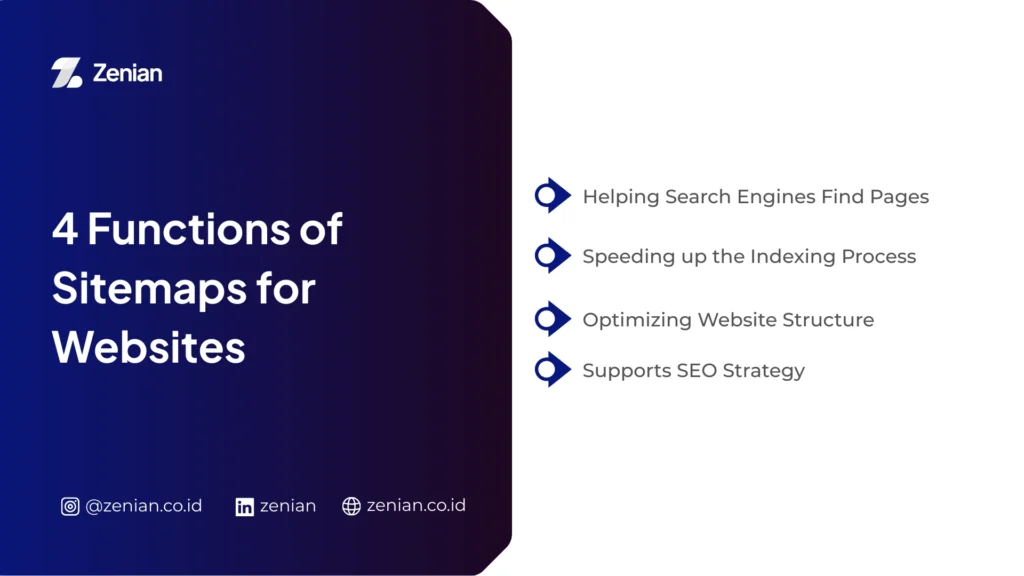
Sitemap Functions in a Website
A sitemap can also improve content management efficiency while strengthening overall SEO performance. Its functions include:
1. Helping Search Engines Find Pages
A sitemap helps search engines discover various pages that are difficult to reach through regular navigation. Hidden pages such as orphan pages can still be detected because they are listed in the sitemap.
On large-scale websites or those with complex structures, a sitemap provides an organized list that simplifies the crawling process. Additionally, search engines can directly find new content without waiting for internal or external links.
2. Speeding Up the Indexing Process
A sitemap allows search engines to perform indexing faster and more efficiently. Through an XML sitemap, search engines receive a list of URLs ready to be crawled, saving time and resources.
Additional information such as <lastmod> helps search engines identify recent updates and prioritize that content. On news sites, a sitemap can even allow articles to be indexed within minutes after publication.
3. Optimizing Website Structure
A sitemap helps you organize your website structure more systematically. Search engines can understand hierarchy and relationships between pages through an XML sitemap.
On the other hand, visual sitemaps help development teams design intuitive navigation flows. Meanwhile, HTML sitemaps help users find information more easily through well-organized content grouping.
4. Supporting SEO Strategy
A sitemap directly contributes to improving SEO performance. By ensuring all important pages are indexed, the chances of appearing in search results increase.
A sitemap also helps optimize crawl budget by directing search engines only to high-quality pages. Additionally, it improves content visibility, including in AI-based systems, and provides priority signals for the most important pages.
Read Too: Definition of SEO On Page, Its Functions, and Optimization Methods
Benefits of Sitemap for SEO and User Experience
A sitemap functions as a map that displays all important links on a website. This improves user comfort when browsing the site. This combination makes it an essential element in modern SEO strategies.
Here are some benefits of a sitemap:
- Improves Website Visibility in Search Engines: A clear structure helps systems understand content priority, allowing rankings to grow more optimally.
- Simplifies User Navigation: Structured links make it easier to access important sections such as products, services, and key information, creating a more intuitive experience.
- Helps Websites with Many Pages: A sitemap is crucial for websites with a large number of pages or complex structures. By using a sitemap index, you can connect multiple files based on specific categories.
- Reduces the Risk of Pages Not Being Indexed: A sitemap ensures every important page can be found by search engines, including pages with limited internal links.
Example of a Website Sitemap
Generally, there are two main types commonly used: XML Sitemap for search engines and HTML Sitemap for users. Both have different functions but equally support SEO performance and user experience.
XML Sitemap Example
An XML sitemap is a text file containing a list of URLs within a site. Typically, this file can be accessed via an address such as yourdomain.com/sitemap.xml. Using this format helps search engines understand which pages need to be indexed.
Technically, XML sitemaps use a standard protocol to structure page lists. Many large companies implement this strategy according to their needs. For example, Samsung uses a sitemap index to connect multiple sitemaps by region.
Best Buy divides files into several compressed sections for efficiency in handling large data. OpenAI uses a simpler approach by displaying only high-priority pages. Meanwhile, Amazon and Walmart group sitemaps by category for more structured crawling.
Some important elements in an XML sitemap include:
<urlset>: Opening tag that wraps the entire list of URLs and defines the standard used.<url>: Container for a specific page.<loc>: Displays the full URL address of the page.<lastmod>: Provides the last updated date in YYYY-MM-DD format.<changefreq>: Suggests how frequently page content changes.<priority>: Indicates the relative importance of a page compared to others.
HTML Sitemap Example
An HTML sitemap structure is designed to be easily understood by humans. Links are usually arranged by category so visitors can navigate without confusion.
Additionally, this page is often placed in the footer for easy access from all pages. With intuitive navigation, users can find content even if the main menu feels incomplete.
Many large companies optimize HTML sitemap displays to improve user experience. For example, Disney groups content by categories such as streaming services, stores, and films.
Moz divides pages into sections like products, free tools, and resources for easy scanning. Microsoft and Apple organize links into large categories with clear subcategories. LinkedIn even provides a user directory connecting millions of profiles for easier manual search.
How to Create a Website Sitemap
You can choose a method based on your platform and technical ability. With the right approach, you can ensure your site structure is well-organized and easy for search engines to understand.
1. Using Sitemap Generator Tools
Most website owners choose practical methods using automated tools or plugins.
- CMS Plugins (WordPress): You can install plugins like Yoast SEO, Rank Math, All in One SEO Pack, or Google XML Sitemap.
- Online Sitemap Generators: If you do not use a CMS, you can still create a sitemap using tools like MySitemapGenerator or features from Semrush.
- Visual Planning Tools: You can also design site structures visually using tools like Figma, Miro, Slickplan, GlooMaps, or Flowmapp.
2. Creating a Sitemap Manually
Developers often choose manual methods when building a website from scratch using frameworks.
- Manual Coding: If using Native PHP or frameworks like CodeIgniter, you need to create scripts to generate XML files containing URL lists.
- XML Tag Structure: You must follow standard XML structures using required tags such as
<urlset>,<url>, and<loc>. Optional tags like<lastmod>,<changefreq>, and<priority>can provide additional information. - Self Maintenance: You need to update the sitemap regularly whenever changes occur on pages to keep data accurate and relevant.
3. Submit Sitemap to Google Search Console
After creating a sitemap, the next step is submitting it to Google.
- Domain Verification: Ensure your domain is registered and verified in Google Search Console (GSC).
- Access Sitemaps Menu: Go to the GSC dashboard and select the “Sitemaps” menu.
- Enter Sitemap URL: Input your sitemap URL (e.g.,
yourdomain.com/sitemap.xml) and click “Submit.” - Monitor Status: Google will process your sitemap. The initial status is usually pending until crawling is complete.
Tips for Creating an SEO-Friendly Sitemap
With the right strategy, you can increase the chances of your pages appearing in search results while optimizing SEO performance. Here are some practical tips:
- Ensure only important URLs are included to avoid wasting crawl budget.
- Use a clean and consistent structure to help search engines understand relationships between pages.
- Update the sitemap regularly so search engines can find and index new content faster.
Optimize Your Website Structure with the Right SEO Strategy!
In conclusion, a sitemap helps search engines discover, crawl, and index website content efficiently. A well-structured website, supported by regular sitemap updates, creates a stronger long-term SEO strategy.
If you want to maximize this potential without dealing with technical complexity, PT Zenian Digital Lab is ready to help. Through SEO services, website development, and integrated digital marketing strategies, you can drive business growth more effectively.
Consult your website optimization needs today and ensure your digital performance grows to its fullest potential!
Read Too: Definition of SEO Off Page, Its Functions and Benefits for Websites