
How to write a good headline and how to write a catchy headline often determine whether content gets noticed or ignored. You need to understand that a headline is not just a complement it’s a crucial element that drives clicks through the click-through rate.
This article will open a new perspective on how to craft words strategically by combining clarity, emotion, and relevance so every headline feels stronger, more compelling, and capable of grabbing attention at first glance.
What Is a Headline and Why Is It Important?
A headline is a brief one-sentence summary that represents the main idea of an article or piece of writing. You can think of it as the “main gateway” connecting readers to the content.
In practice, a headline provides a quick overview of the topic and the value readers will gain. Therefore, it must be clear, relevant, and able to communicate the core message effectively in a short time.
Here are the main reasons why headlines are important:
- They are the key factor that encourages someone to click and read further. Without a strong headline, even high-quality content can be overlooked.
- They create the first impression of your writing. A compelling headline helps your content stand out among the vast amount of information online.
- Headlines containing keywords help search engines understand the topic and display the content to the right audience.
How to Write Good and Catchy Headlines
Many readers stop at the headline, so you need to craft it strategically to remain informative and engaging. With the right approach, a headline can quickly convey the core message and encourage clicks.
1. Use Clear and Specific Words
An effective headline should immediately communicate the main idea without making readers guess. Clarity is key.
- Avoid generic labels like “Report” or “Analysis” because they don’t convey value.
- Place the main keyword at the beginning of the headline for better visibility.
- Deliver a clear promise. Specific headlines feel like a direct message to the right audience.
This way, your headline becomes both informative and relevant.
2. Match the Content
A good headline must align with the content.
- Ensure the headline accurately represents the article as a one-sentence summary.
- Avoid excessive clickbait that doesn’t match the content.
- Write the headline after finishing the content to capture the strongest point.
3. Use an Easy-to-Understand Structure
A clear structure helps readers quickly grasp the message.
- Keep it concise—ideally 55–70 characters.
- Use active sentences with a clear structure (Subject, Verb, Object).
- Apply proven headline formulas such as:
- Numbers (listicles)
- How-to guides
- Questions
- Descriptors like [Free Template] or [Video]
Also apply the principle: Simple, Succinct, Specific.
4. Use Numbers or Lists (Listicles)
Numbers attract attention and provide structure.
- They set clear expectations.
- They make content easier to scan.
- Example: “5 Tips for Writing Headlines” or “10 Best Joggers.”
5. Add Powerful Words
Word choice significantly impacts appeal.
- Words like Best, Free, Complete, Emotional trigger engagement.
- Use action verbs like Create, Discover, Build.
- Quotes or strong statements can increase credibility.
6. Build Curiosity
Great headlines make readers want to know more.
- Add a “spice” with unexpected angles or references.
- Use the Big Reveal technique: “5 Secrets You Didn’t Know…”
- Create slightly provocative phrases.
- Don’t reveal everything—leave room for curiosity.
7. Use SEO Keywords
A strong headline must appeal to both readers and search engines.
- Place the main keyword at the beginning.
- Use commonly searched terms.
- Keep it within 55–70 characters.
- Ensure the keyword blends naturally into the sentence.
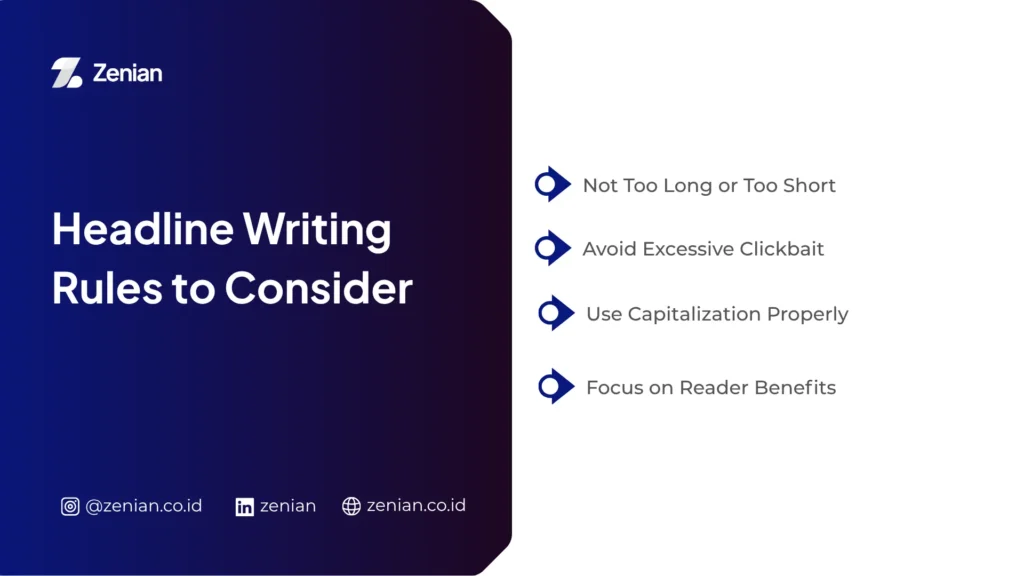
Headline Writing Rules to Consider
1. Not Too Long or Too Short
Ideal length is 55–70 characters. It should be readable in one breath.
Avoid overly short or vague titles that lack clarity.
2. Avoid Excessive Clickbait
Headlines should be engaging but honest. Misleading headlines damage trust.
Focus on real value rather than exaggeration.
3. Use Capitalization Properly
Consistent formatting improves readability and professionalism.
- Use Capitalize Each Word style.
- Highlight key parts using bold or italic if needed.
4. Focus on Reader Benefits
Effective headlines emphasize benefits, not just features.
- Show what readers will gain.
- Use personal language like “you” to create connection.
6 Examples of Effective Headlines
1. Using Numbers
- “10 Tips for Choosing Your Dream Home”
- “7 Ways to Make Your Living Room Look Bigger”
2. How-To Guides
- “How to Design a Comfortable Minimalist Home”
- “How to Manage Finances to Buy a House Faster”
3. Questions
- “Why Are Minimalist Homes So Popular?”
- “What Mistakes Should You Avoid When Buying Your First Home?”
4. Benefit-Focused
- “Kitchen Designs That Make Cooking More Comfortable”
- “Saving Strategies to Help You Own a Home Faster”
5. Academic Structure
- “The Impact of Home Design on Urban Living Comfort”
6. Alliteration
- “Smart Steps to Shape a Stylish Space”
- “Practical Tips to Pick the Perfect Property”
Common Mistakes When Writing Headlines
One of the most common mistakes is creating headlines that don’t match the content. Overly sensational headlines may increase clicks but often disappoint readers.
Other frequent mistakes include:
- Headlines that are too general or vague
- Abstract wording that lacks clarity
- Missing relevant keywords, which harms SEO performance
Without proper keywords, content is less likely to appear in search results and reach a wider audience.
SEO Headline Optimization Tips
Place Keywords at the Beginning
This helps search engines quickly identify your topic and signals relevance.
Use Ideal Length
Keep headlines within 55–70 characters to avoid being cut off in search results.
Test Multiple Variations
Create 5–10 headline variations per content piece.
- Compare performance using A/B testing
- Analyze audience preferences
- Use tools like headline generators for inspiration
Boost Your Content Performance with Zenian
Writing effective headlines requires a balance between creativity and SEO strategy. Applying these tips can improve CTR, but a strong headline is only the beginning of a larger digital strategy.
If you want to optimize your content performance and overall marketing strategy, PT Zenian Digital Lab can help through integrated 360° digital marketing services.
Maximize your business potential start collaborating today and experience more structured growth!
Read Too: How to Write a Good article and Proper for Beginners